
HEALTH
How Does Mounjaro Work For Weight Loss?
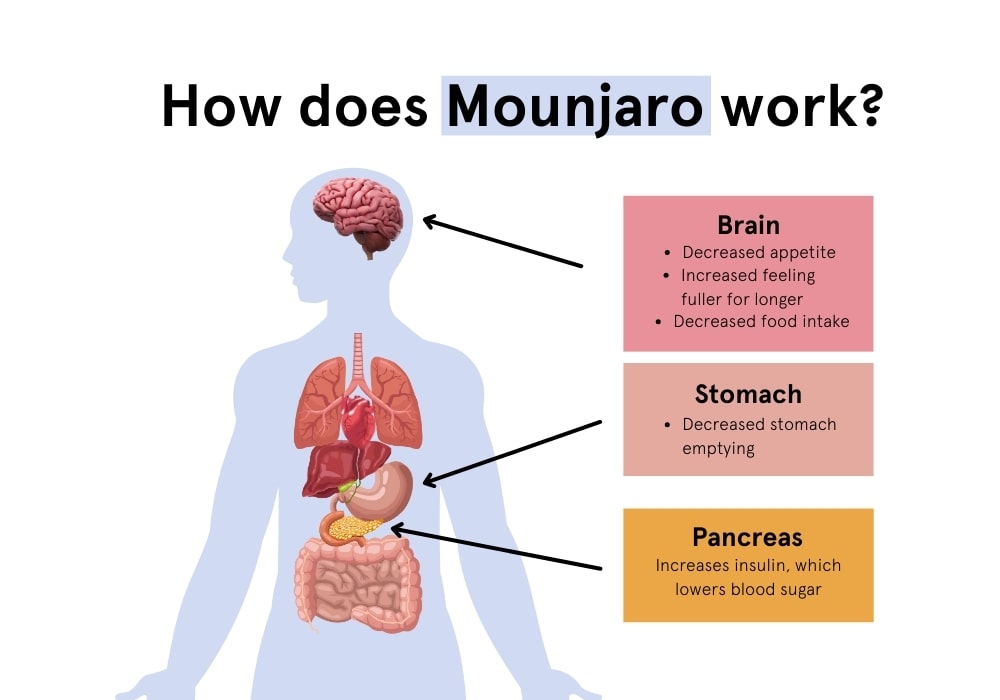
How does Mounjaro work? This guide explains what it is, how weekly dosing works, and how it affects appetite. Learn what results to expect, how it compares with other GLP-1 medicines, and who it may suit.
If you have heard about Mounjaro and are thinking of getting started on treatment, you might be wondering how it helps with weight loss. It is sensible to understand how a medicine works before you decide if it fits your needs and your lifestyle.
But there is a lot of information online, and it is not always clear or reliable.
So, this guide explains what Mounjaro is, how you take it, what it does inside your body, and what results you might expect. You’ll find out how it compares with other GLP-1 medicines and how to decide if it could be right for you.
What is Mounjaro?
Mounjaro is the brand name for tirzepatide. It is a once-weekly injectable medicine licensed in the UK for weight management and type 2 diabetes.
Mounjaro is licensed for use in adults who:
- Have a BMI of 30 or more
- Have a BMI of 27 or more with at least one weight-related health condition or are from a Black, Asian or minority ethnic background
How Do You Take Mounjaro?
You take Mounjaro once a week as a subcutaneous injection. That means you inject it under the skin, usually in the tummy, thigh or upper arm. You rotate the site each week to reduce irritation.
You start on a dose of 2.5 mg. Your prescriber will then gradually increase your dose, staying on each dose for a minimum of four weeks. Eventually you’ll reach your maintenance dose.
This slow increase (known as ‘titration’) helps your body get used to the medicine. It reduces common side effects such as nausea.
Early doses are designed to help you tolerate the treatment and not for rapid weight loss, which is important to remember when you begin.
As Simple Online Pharmacy’s Superintendent Pharmacist Aamina Rafiq says: “[Results are] not going to happen overnight. It’s a slow, manageable journey, and if you make those changes slowly over time, you’re going to sustain them.”
If you are ever unsure about which dose to take, speak to your prescriber or pharmacist for advice.
How Does Mounjaro Work For Weight Loss?
Mounjaro works by mimicking two hormones: glucose-dependent insulinotropic polypeptide (GIP) and glucagon-like peptide (GLP-1). These hormones help regulate appetite and blood sugar after you eat.
By mimicking these hormones, Mounjaro:
- Suppresses appetite and reduces cravings by acting on brain regions that control hunger and fullness
- Slows gastric emptying so food leaves the stomach more slowly, which helps you feel full for longer after meals
- Supports insulin release and reduces glucagon when blood sugar is high, which helps stabilise blood sugar levels
“By reducing hunger, managing cravings, and helping you feel fuller for longer, patients tend to eat less and make healthier choices,” Simple’s Chief Clinical Officer, Abdal Alvi, explains.
Weight loss medications, like Mounjaro, work best with a balanced diet and exercise.
“It should never be seen as a quick fix,” Abdal stresses. “The medication allows you to make long-term, sustainable changes for your health.”
What Results Can I Expect?
Clinical trials give us a reliable picture of what is possible when Mounjaro is used with healthy lifestyle changes. In a 72-week study in overweight adults, patients lost between 15% and 21% of their body weight, on average, depending on dose.
Weight loss results vary from person to person. Some people notice appetite changes in the first one to two weeks, but it may take longer for others. Weight loss often becomes more visible after eight to 12 weeks, once your dose has increased and you have created new habits.
Plateaus and weight gain can happen to almost everyone on their weight loss journey. If you feel like you’re not losing weight on Mounjaro, a review of sleep, protein intake, fibre, steps and resistance exercise can help.
Your prescriber can also check whether your current dose and schedule still suit you.
Mounjaro vs Other GLP-1s: How Are They Different?
The biggest difference between Mounjaro and other GLP-1s is the mechanism. Mounjaro mimics two hormones: GIP and GLP-1. Other GLP-1 weight loss treatments, like Wegovy and Saxenda, mimic the GLP-1 hormone only.
Some suspect this dual mechanism suppresses appetite more effectively and results in more weight loss, compared with other GLP-1 weight loss injections.
Is Mounjaro Right for Me?
Mounjaro might be considered if:
- You meet clinical criteria for medical weight management or have type 2 diabetes needing better control
- You are ready to support treatment with a reduced-calorie, balanced diet, regular movement and good sleep
It may not be suitable if you have certain medical conditions, are pregnant or breastfeeding or take specific medicines. A healthcare professional can help you determine if you shouldn’t take Mounjaro.
Only get prescription medicines from regulated providers, and complete assessments honestly so prescribers can keep you safe.
If you have a history of gallbladder issues, pancreatitis, a personal or family history of thyroid cancer, or have any active cancer, make sure you share this with your clinician. Guidance and suitability rules vary by provider.
Next Steps
If you feel it might be right for you, the next step is simple.
Start with a quick online health assessment from a regulated provider. Share your medical history and goals, and ask any questions you have. A prescriber can then confirm if the medication is suitable, prescribe Mounjaro and give you a plan that fits your life.
Key Takeaways
- Mounjaro: How Does It Work? It has a dual mechanism. Tirzepatide (the active ingredient) activates both GIP and GLP-1 receptors. This can reduce hunger, slow stomach emptying and support blood sugar control.
- Once Weekly Dosing: You inject Wegovy once a week, every week. This keeps medication levels steady in your body.
- Results Build Over Months: Appetite often falls in one to two weeks. Visible weight loss usually appears after 8 to 12 weeks and grows with consistent habits.
- Stronger Outcomes vs GLP-1-only in Trials: Data show greater average weight loss with Mounjaro than Wegovy at 72 weeks. Individual results still vary.
- Lifestyle Still Matters: Best results come when weekly injections sit alongside a reduced-calorie, balanced diet, regular movement, good sleep and support from your clinician.
References
Aronne, L.J., Horn, D.B., Le Roux, C.W., Ho, W., et al., 2025. Tirzepatide as Compared with Semaglutide for the Treatment of Obesity. The New England Journal of Medicine, 393(1), pp.26-36 [PDF online]. Available from: https://www.nejm.org/doi/pdf/10.1056/NEJMoa2416394.
Eli Lilly and Company, 2024. How long will MOUNJARO® (tirzepatide) be in the body after the last dose? [Online]. Available from: https://medical.lilly.com/us/products/answers/how-long-will-tirzepatide-be-in-the-body-after-the-last-dose-165280.
Eli Lilly and Company, 2022. MOUNJARO™ (tirzepatide) Injection: Highlights of Prescribing Information [PDF online]. Available from: https://www.accessdata.fda.gov/drugsatfda_docs/label/2022/215866s000lbl.pdf.
European Commission, 2023. Community Register of medicinal products: Annex [PDF online]. Available from: https://ec.europa.eu/health/documents/community-register/2023/20230823159948/anx_159948_en.pdf.
Jastreboff, A.M., Aronne, L.J., Ahmad, N.N., Wharton, S., Connery, L., Alves, B., Kiyosue, A., Zhang, S., Liu, B., Bunck, M.C. and Stefanski, A., et al., 2022. Tirzepatide Once Weekly for the Treatment of Obesity. The New England Journal of Medicine, 387(3), pp.205-216. [Online]. Available from: https://www.nejm.org/doi/full/10.1056/NEJMoa2206038.
South West London Integrated Care Board, 2025. Glucagon-like peptide-1 (GLP-1) mimetics: Version 1.1 [PDF online]. Available from: https://swlimo.southwestlondon.icb.nhs.uk/wp-content/uploads/Glucagon-like-peptide-1-GLP-1-Mimetics-Version-1.1.pdf.